Nigeria’s long-term prosperity will not be written in oil wells or natural resources; it will be written in classrooms, health clinics, and the productivity of its young, rapidly growing population. With more than 60 per cent of citizens under the age of 25, the country’s true wealth lies in its people. Recognising this, the Federal Government’s Human Capital Development (HCD) programme has emerged as one of the most transformative national efforts in recent times. But we believe that for Nigeria to truly capitalise on this momentum, there is a clear and urgent need for the government to double down and scale HCD initiatives across all states, and for all state governments to key into the initiative, regardless of political affiliation.
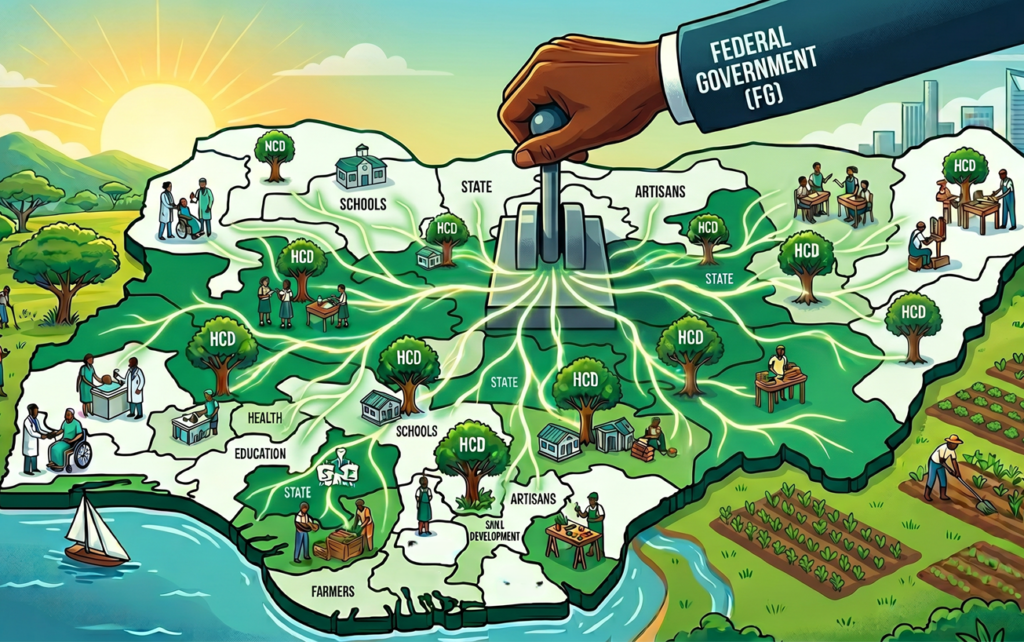
The National HCD Programme was never designed as a one-size-fits-all policy; it was structured to catalyse state-level innovation through a decentralised but data-driven framework. Anchored on three core pillars, health and nutrition, education, and labour force participation, the programme’s goal is to raise a generation of Nigerians who are not only healthy and educated but also economically active. And in states where political will has matched the policy vision, the outcomes speak for themselves.
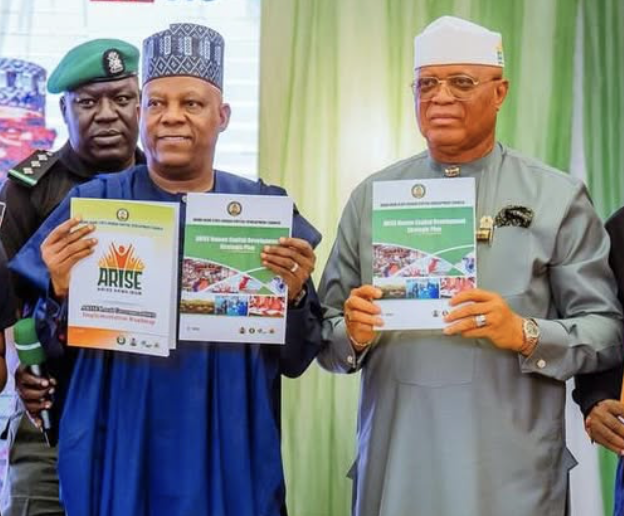
To us, Akwa Ibom State provides a powerful case study. The state has embraced the HCD strategy with measurable results: a 22 per cent jump in early childhood enrolment, a 31 per cent increase in skilled birth attendants, and a notable reduction in infant mortality from 61 to 47 deaths per 1,000 live births. The state’s youth employment drive, supported by targeted skills acquisition programmes, has engaged over 18,000 young people in the last two years alone. These achievements are not isolated; they are the outcome of rigorous planning, local ownership, and the strategic application of a results-based monitoring dashboard tracking over 50 human capital indicators at the grassroots.
This level of progress, however, remains uneven across the federation. While 33 states and the FCT have formally adopted the HCD framework, the depth of implementation varies widely. Some states have yet to convert the framework into sustained action, owing to bureaucratic inertia, lack of political prioritisation, or inadequate coordination between ministries and local government actors.
This is where we argue that governments across the country must recalibrate their role, not just as facilitators, but as drivers. Scaling HCD across all 36 states requires sustained federal commitment in three key areas: technical support, fiscal incentives, and accountability mechanisms. States that demonstrate measurable improvements in health, education, and employment outcomes could be rewarded with additional resources or policy levers. On the other hand, lagging states should face targeted federal intervention to unblock bottlenecks and align execution with national goals.
Moreover, the integration of private sector partnerships and international development agencies can further amplify impact, especially in areas such as technical and vocational education, maternal and child health, and digital skills development. But without a strong federal backbone, these partnerships may remain fragmented or underleveraged. In a post-pandemic global economy where competitiveness increasingly depends on human capability, Nigeria cannot afford to treat human capital as an optional agenda item. It must be the national strategy.
The cost of inaction is already visible, in the country’s productivity gap, skills mismatch, and growing social inequality. By scaling the HCD programme with intentionality and speed, governments have the opportunity to shape a new economic narrative, one driven not just by gross domestic product (GDP) numbers but by the quality of life of every Nigerian citizen. The data is compelling. The roadmap exists. What is needed now is stronger government resolve to ensure that every state, not just the most proactive, becomes a hub of human capital advancement. Because in the end, no matter how diverse Nigeria’s challenges may be, the solution begins with the same truth: investing in people is investing in progress.