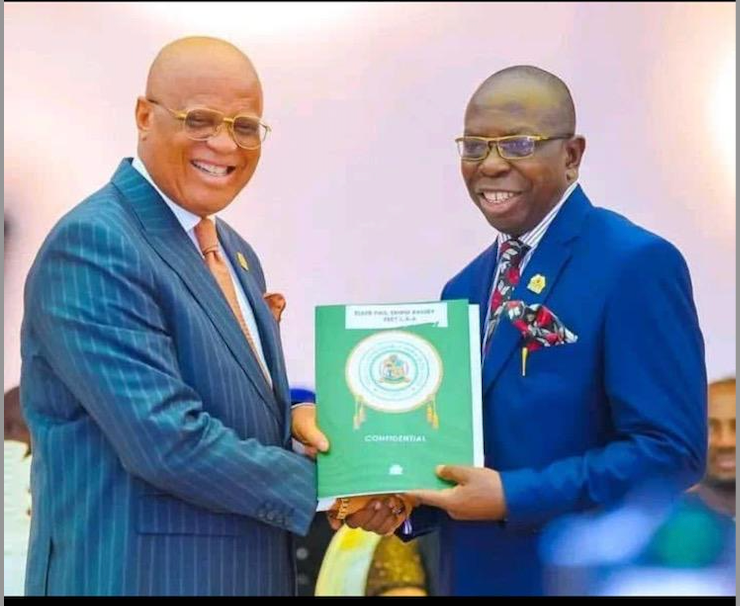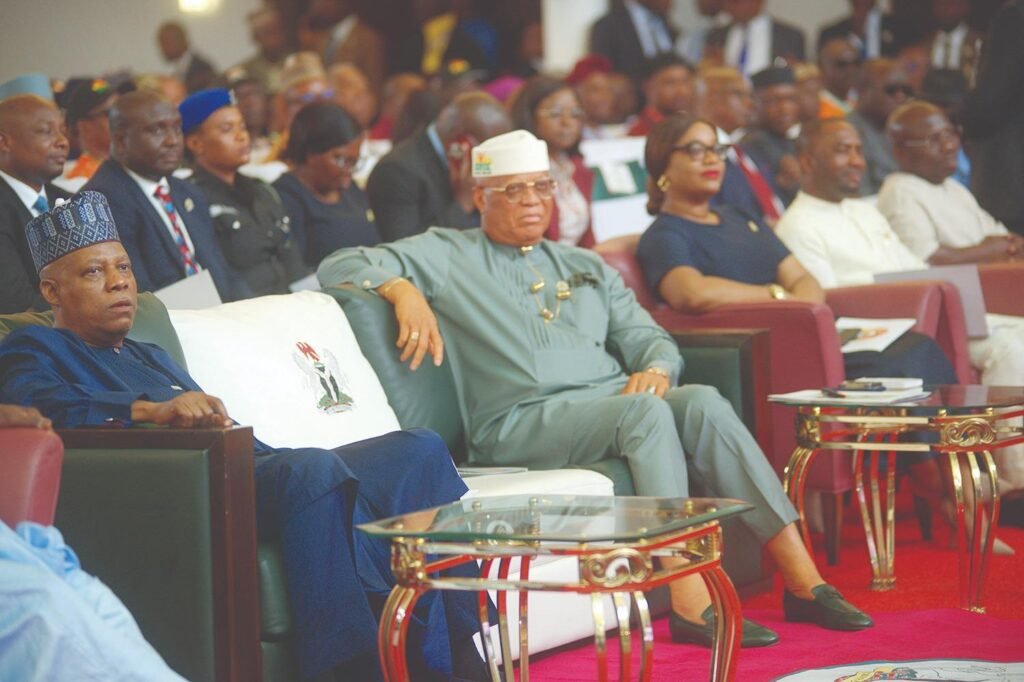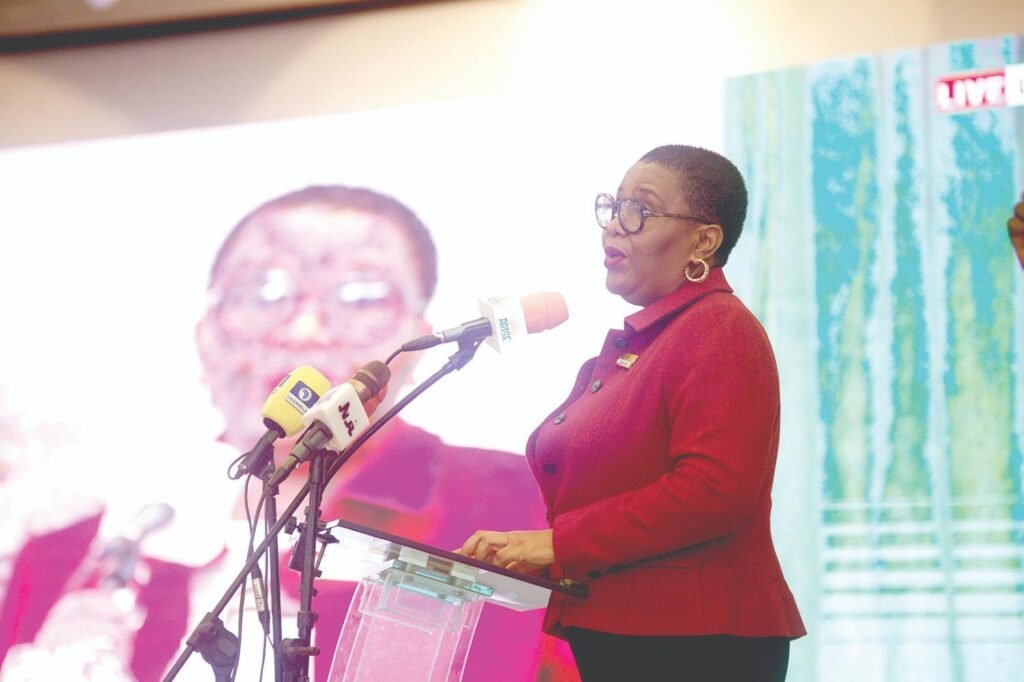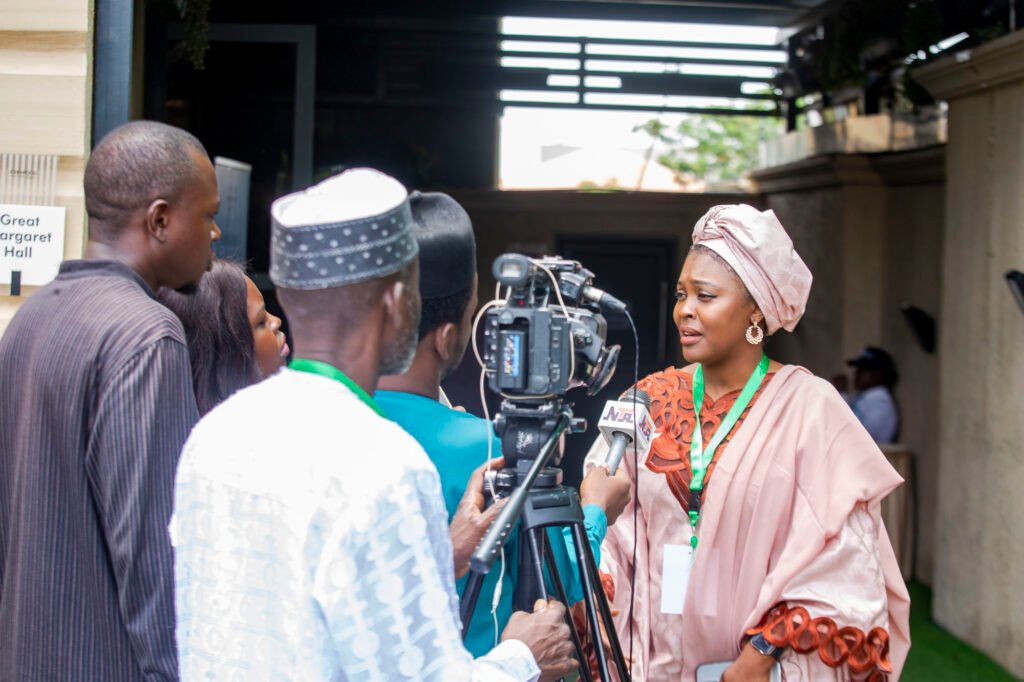

A decisive step toward reshaping Nigeria’s developmental trajectory comes with the launch of the Akwa Ibom State ARISE Human Capital Development (HCD) Strategy, marking a critical moment in the country’s long-term economic planning.
Vice President Kashim Shettima has chosen to take HCD initiatives beyond political leanings and affiliation, reflecting his conviction in national development as the focus of the programme in Uyo, Akwa Ibom State. For him, the Federal Government’s development actions must spread across the different states in Nigeria. Prioritising measurable outcomes, this localised blueprint aligns with the national HCD goals, placing people at the centre of governance.
At the official flag-off in Uyo on 14 April 2025, Vice President Kashim Shettima described the moment as a landmark for Nigeria’s second phase of the National Human Capital Development Programme, HCD 2.0. The revised strategy aims to consolidate and accelerate progress made in the first phase by integrating cross-sectoral, data-driven solutions that place people at the centre of governance.
The Vice President lauded this move as more than symbolic leadership; it is, he said, a deliberate step towards measurable impact. Backed by data, the state’s performance speaks volumes. While Nigeria’s national under-five mortality rate stands at 110, Akwa Ibom records a significantly lower rate of 80. With just 3.5 per cent of primary school-aged children out of school, well below the national average of 25.6 per cent, the state has proven itself a model of proactive governance and policy localisation.
The launch of the ARISE HCD Strategy was also coupled with the continuation of the National HCD Accelerator Project on Clean Cooking, Project Fuuku. Introduced in Nasarawa State and now extended to Akwa Ibom State, the project brings safe, clean cookstoves to vulnerable households. The initiative addresses a multidimensional challenge: reducing maternal health risks, mitigating environmental degradation, and easing the burden on rural women.
According to the Vice President, this gender-sensitive and climate-conscious intervention is more than an energy policy; it is a tool for equity and resilience. What makes the current momentum particularly promising is the real-time data tracking now embedded in the HCD programme. The HCD Dashboard launched by the Federal Government allows state and local governments to track indicators such as immunisation rates, child malnutrition (stunting), maternal mortality, learning outcomes, and youth unemployment.
“We cannot solve what we do not measure,” the Vice President said. “Behind every statistic is a human being, a life that either flourishes or falters based on our policies.”
To ensure the sustainability of this reform agenda, the Federal Government is institutionalising the HCD Fund. The idea is to buffer these investments from political turnover, ensuring that the gains made today are not undone tomorrow. With plans to reach a Human Capital Index (HCI) of 0.6 and rank among the world’s top 80 nations by 2030, Nigeria’s strategy now hinges on smart financing, swift implementation, and data-backed governance.
Vice President Shettima summed it up clearly: “There is no legacy greater than investing in people.” And in a country where human potential remains the most underutilised resource, this legacy is not only welcome, it is long overdue.
In his statement at the launch, Governor Umo Eno emphasised that real prosperity in the 21st century lies not in infrastructure or natural resources, but in the people: their skills, their health, and their potential. He described the plan as a practical manifestation of inclusive growth, where every citizen, regardless of background, has the opportunity to thrive and contribute meaningfully to society. He called on stakeholders at all levels to rally around the vision of building a more equitable and empowered Akwa Ibom.
Structured in four detailed chapters, the roadmap begins by laying out the background of the HCD initiative in the state. It underscores the establishment of local steering committees tasked with overseeing implementation and ensuring that community needs are at the heart of every intervention. By localising this framework across all its local government areas, Akwa Ibom State has become the first state in the federation to align its subnational development blueprint fully with the national HCD priorities.